Haomei Aluminium supplies aluminum alloy strip for cable manufacturers and cable-component processors. Depending on the cable construction and forming process, buyers can discuss 5052, 5154, 5154A and selected commercially pure aluminum grades, together with slit or rounded edges and customer-defined coil dimensions.
The correct strip is not selected by alloy name alone. The cable drawing, armor profile, forming equipment, required mechanical properties and applicable cable specification all affect the material choice. Use the information below as a purchasing and engineering checklist; confirm final values against the approved quotation, drawing and batch inspection documents.
Product Overview

Aluminum strip for cable armoring is a flat, coil-supplied metal product processed to the dimensions and mechanical condition required by a cable armor design. During cable manufacture, the strip may be formed, wrapped or interlocked around the cable core or inner sheath, depending on the construction specified by the cable manufacturer.
The armor layer is primarily a mechanical component. It can help protect the cable against damage during handling, installation and service. It should not be confused with a dedicated electrical screen, a water-blocking barrier or a complete grounding system. Those functions depend on the complete cable design, material continuity, joints, bonding and test requirements.
Aluminum Alloy Options for Cable Armor
The following comparison is a material-selection guide, not a substitute for a standard-specific mechanical-property table. Strength and elongation depend on alloy, temper, thickness, product form and the governing specification.
| Alloy | Material characteristics | When to evaluate it | Selection caution |
|---|---|---|---|
| 5052 | Al-Mg alloy with a useful balance of strength, corrosion resistance and cold-forming capability. | General cable armor designs where the drawing and forming process call for a 5xxx alloy. | Specify the exact temper and thickness; do not transfer mechanical values from another temper. |
| 5154 | Al-Mg alloy option for designs requiring a different strength and forming balance from 5052. | Applications where the cable maker's specification identifies 5154 or where comparative trials support its use. | Confirm chemistry and mechanical properties against the ordered standard and batch certificate. |
| 5154A | Higher-magnesium alloy option identified in the supplied product information. | Evaluate when the design requires its specified mechanical-property range and the forming line can process it. | Do not assume it is a drop-in replacement for 5154; approve the exact designation and temper. |
| 1060 | Commercially pure aluminum with high ductility and conductivity but lower strength than the 5xxx options. | Selected designs where conductivity or forming behavior is important and the mechanical duty is compatible. | It is not automatically suitable for structural armor; verify the cable's mechanical requirements. |
For a first comparison, ask the supplier to quote the same thickness and coil format in the candidate alloys. Review the mill test certificate (MTC), tensile test results and forming-trial observations together. Comparing alloy names without matching temper and dimensions can lead to an invalid material decision.
Temper Selection: O, H22, H24 and H32
Temper describes the material condition and processing history. It affects strength, ductility and how the strip behaves during forming. The correct temper depends on the armor profile, bend severity, line speed, tooling and the mechanical requirements of the finished cable.
- O temper: annealed condition, generally considered when high ductility and extensive forming are required. Its lower strength must still meet the design requirement.
- H22: a strain-hardened and partially annealed condition. Confirm the exact temper designation and properties for the selected alloy and thickness.
- H24: a strain-hardened and partially annealed condition. Do not treat H24 and H32 as interchangeable simply because both are commonly described as quarter-hard conditions.
- H32: a strain-hardened and stabilized condition. Confirm its forming behavior and mechanical properties for the specific product specification.
Before placing a production order, the cable manufacturer should confirm the temper on the drawing or purchase specification. Where the armor profile is sensitive to cracking, springback, wrinkling or tracking, run a representative coil through the actual forming line before approving bulk production.
Product Specifications and Customization
Aluminum strip for cable armoring is normally ordered against a customer drawing or written purchase specification. The dimensions below are the items to define; they are not universal standard sizes. Available production ranges and achievable tolerances must be confirmed by Haomei for the selected alloy, temper, thickness and order quantity.
| Parameter | What to specify | Why it matters |
|---|---|---|
| Alloy | 5052, 5154, 5154A, 1060 or another approved grade | Determines the chemistry and the available mechanical-property range. |
| Temper | O, H22, H24, H32 or the exact condition on the drawing | Affects forming behavior, strength and springback. |
| Thickness | Nominal thickness plus positive and negative tolerance | Controls armor geometry, fit and material consumption. |
| Width | Nominal slit width plus width tolerance | Influences coverage, overlap or interlock geometry and line tracking. |
| Edge condition | Slit, deburred or rounded; define allowable burr height and direction | Reduces the risk of damaging adjacent cable layers and improves safe handling. |
| Surface | Mill finish or other agreed finish; define acceptable marks and contamination | Supports consistent feeding and helps prevent surface-related defects. |
| Coil dimensions | Inner diameter (ID), outer diameter (OD), coil mass and winding direction | Must fit the payoff equipment and handling limits. |
| Coil condition | Winding tightness, telescoping limit, coil set and end protection | Helps avoid interrupted payoff and strip tracking problems. |
| Documentation | MTC, chemical analysis, mechanical test report, inspection record and traceability | Connects the delivered coil to the approved material requirements. |
Edge Quality: Slit, Deburred and Rounded
Edge condition is a functional requirement for cable armor strip, not just a cosmetic preference. A sharp burr can score adjacent layers, create handling hazards or interfere with stable feeding. The acceptable edge depends on strip thickness, alloy and temper, forming profile, line speed and the cable construction.
| Edge option | Description | Points to agree before production |
|---|---|---|
| Slit edge | Edge produced by slitting the master coil. | Allowable burr height, burr direction, edge straightness and inspection method. |
| Deburred edge | Slit edge with an additional edge-finishing operation. | How much edge finishing is required and whether both edges are treated. |
| Rounded edge | Edge profile is rounded to the agreed geometry. | Radius or profile definition, dimensional impact and sample approval. |
For a new cable construction, send a drawing or an approved edge sample. The purchase order should define how burr height is measured, the sampling frequency and the acceptance limit. Avoid using vague instructions such as “burr-free” unless the inspection method and numerical limit are agreed.
How to Select Strip for Different Armor Processes
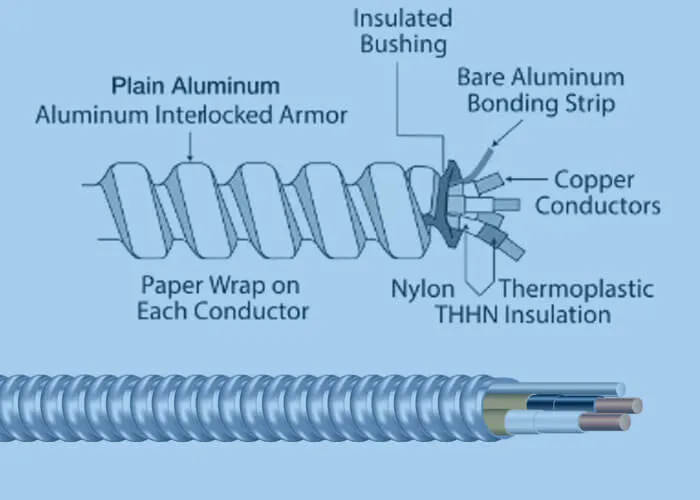
Interlocked armor
Interlocked armor requires the strip to form a repeatable profile and engage consistently with adjacent turns. Thickness consistency, temper, edge condition and strip tracking all affect the forming result. The cable producer should validate the profile with the actual tooling and line settings.
Helically wrapped strip
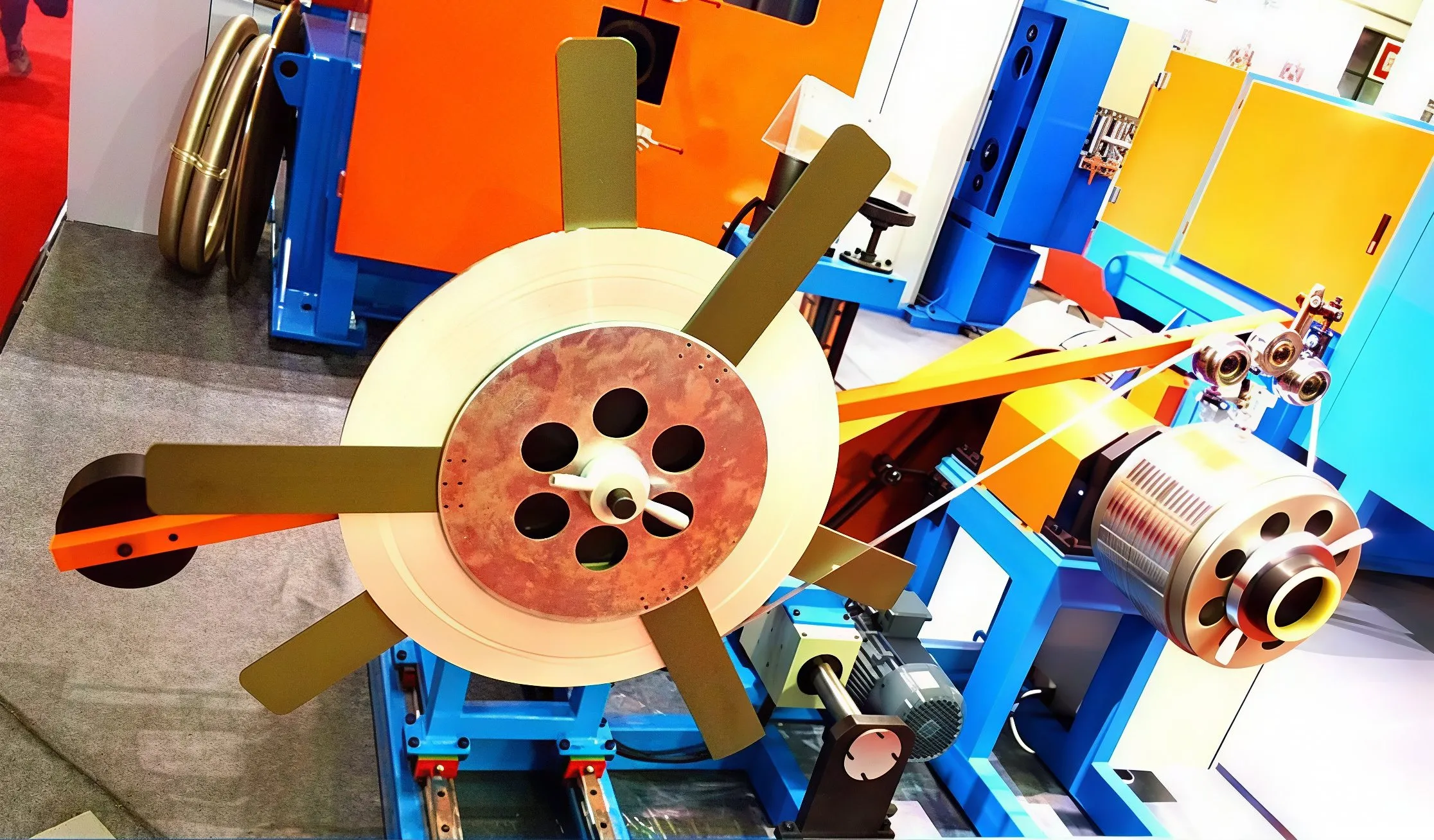
For a helical construction, the strip must feed at a stable tension and maintain the specified pitch, coverage and overlap. Width, coil winding quality and edge condition should be checked together with the cable drawing.
Longitudinally applied strip
Where the cable design uses longitudinal application, the strip width, forming sequence, joint design and final sheath arrangement must be defined by the cable manufacturer. Do not assume that a coil intended for interlocked armor is suitable for a different construction.
Mechanical Armor Is Not the Same as Electrical Shielding
Aluminum is electrically conductive and non-ferromagnetic. These are useful material characteristics, but they do not prove that a finished cable meets a particular electromagnetic compatibility, shielding or grounding requirement.
- Mechanical armor is designed to resist specified external mechanical stresses.
- Electrical shielding depends on the screen material, coverage, continuity, bonding and the frequency range of concern.
- Grounding and bonding depend on the cable system design, electrical connections and installation practice.
- Water resistance depends on the cable's sheath, barriers, sealing and tested construction.
For single-core AC cable designs, non-ferromagnetic armor materials may be considered to manage magnetic effects associated with ferromagnetic armor. The final electrical and thermal performance must be assessed at cable-system level by the cable designer.
Quality Control for Cable Armoring Aluminum Strip
A useful inspection plan links every acceptance check to a measurable requirement. For cable armor strip, the following checks should be agreed between the buyer and supplier before production.
- Material identity: verify alloy, temper, heat or batch number and coil identification against the order.
- Chemical composition: review the material test certificate against the specified alloy standard and purchase requirements.
- Mechanical properties: check tensile strength and elongation for the ordered alloy, temper and thickness using the agreed test method.
- Dimensions: measure thickness and width with calibrated instruments at the agreed sampling locations.
- Edge condition: inspect both edges for burrs, cracks, tears, sharp projections and edge damage against the agreed limit.
- Flatness and winding: check camber, edge wave, coil telescoping, winding tightness and payoff suitability.
- Surface: check for scratches, corrosion, embedded particles, oil contamination or other defects defined in the order.
- Packaging and traceability: confirm moisture protection, edge protection, labels and coil-to-certificate traceability.
Where production continuity is critical, inspect the first delivered coils before releasing the full lot. A line trial at normal operating speed can reveal tracking, forming or edge problems that may not be visible on a small flat sample.

Standards and Technical Documents
Standards must be selected according to the product form and the finished cable construction. A reference to a standard on a product page does not mean that every supplied coil is automatically certified to it.
- ASTM B209/B209M covers aluminum and aluminum-alloy sheet and plate, including coiled sheet. Confirm with the buyer and supplier whether its scope and product-form requirements apply to the ordered strip.
- IEC 60502 series covers power cables with extruded insulation and their accessories within the voltage ranges stated in the relevant part. It is a cable standard, not a stand-alone aluminum strip material certificate.
The purchase specification should identify the applicable edition, alloy and temper designation, product form, test requirements and acceptance criteria. If a customer specification or national cable standard takes precedence, state that document explicitly in the inquiry and order.
Packaging, Storage and Delivery
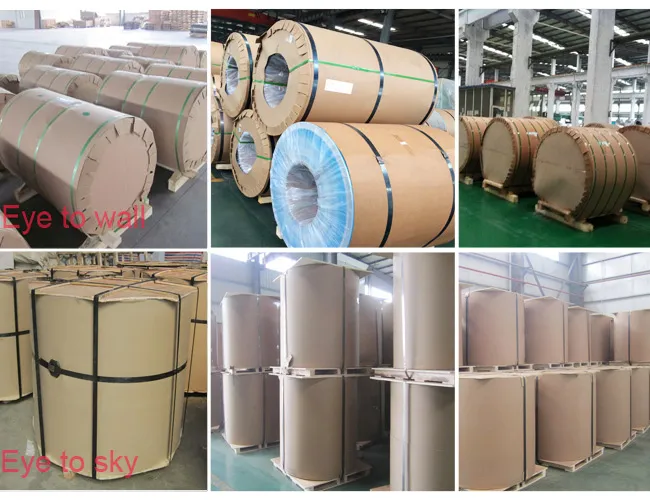
Coil packaging should protect the strip from moisture, edge impact, contamination and movement during transport. The final packing method depends on coil mass, dimensions, shipping route, handling equipment and the buyer's receiving requirements.
- Protect the coil surface and edges with suitable wrapping and edge protection.
- Use a pallet or case designed for the coil's actual mass and lifting method.
- Keep coil labels readable and link each coil to its batch documentation.
- Specify eye-to-sky or eye-to-wall orientation where it affects loading and unloading.
- Store coils in a dry environment and avoid condensation, standing water and direct exposure to weather.
Confirm packing dimensions, gross weight, pallet or case type, loading plan and shipping marks before dispatch. Do not rely on a generic container loading estimate for a shipment without checking the actual coil dimensions and weight distribution.
How to Prepare an RFQ for Aluminum Strip for Cable Armoring
A complete inquiry helps the supplier check production feasibility and quote the correct product. Send the following information where available:
- Alloy and temper, including the governing material standard.
- Nominal thickness and thickness tolerance.
- Strip width and width tolerance.
- Edge type and maximum allowable burr height.
- Surface finish and any coating or cleanliness requirement.
- Coil ID, maximum OD, target coil weight and winding direction.
- Cable type and armor process: interlocked, helical or longitudinal.
- Required mechanical properties and inspection documents.
- Trial quantity, regular order quantity and target delivery date.
- Destination port and packaging or labeling requirements.
If you have an existing approved strip sample, cable drawing or material specification, attach it to the inquiry. These documents are more useful than a request for “standard aluminum strip” because they let both sides check the same acceptance criteria.
Why Discuss Your Requirement with Haomei Aluminium?
Haomei Aluminium handles inquiries for aluminum alloy strip and related slit-coil requirements. For cable armoring projects, the inquiry should be reviewed against the buyer's alloy, temper, dimensions, edge condition, coil format and documentation requirements.
Before confirming an order, ask Haomei to state the achievable dimensions and tolerances, applicable material standard, inspection scope, batch documentation, sample availability, minimum order quantity and delivery schedule in the written quotation. These items should be confirmed for the specific order rather than inferred from a general product description.
For product-range information, see Aluminum Alloy Strip, 5052 Aluminum Strip, Aluminum Temper Guide and Aluminum Strip Processing Services.
Frequently Asked Questions
Which aluminum alloy is commonly considered for cable armoring?
5052 is a common starting point for evaluating aluminum alloy cable armor because it offers a balance of strength, corrosion resistance and formability. 5154 and 5154A may be considered where the design specifies different mechanical properties. The cable drawing and forming trial should determine the final choice.
Can 1060 aluminum strip be used for cable armoring?
It can be considered for selected constructions where its ductility or conductivity is useful and its lower strength is acceptable. It should not be assumed suitable for every structural armor application. Check the required mechanical performance before selecting it.
What thickness is available?
Thickness is project-specific. The supplied product information contains several different ranges for different product descriptions, so a single universal range should not be assumed. Send the required thickness and tolerance to confirm current production feasibility.
Should I choose O, H22, H24 or H32 temper?
Choose the temper according to the forming profile, required strength and cable design. O temper generally offers higher ductility, while work-hardened and partially annealed tempers provide different strength-formability balances. Confirm properties for the exact alloy and thickness.
Is slit edge suitable for cable armor strip?
It may be suitable when the slitting quality and burr condition meet the cable manufacturer's acceptance criteria. For sensitive cable layers or high-speed forming lines, buyers may specify deburred or rounded edges. Define the burr limit and inspection method in the order.
Does aluminum armor provide electromagnetic shielding?
Not automatically. Aluminum is conductive, but shielding effectiveness depends on the finished cable's layer continuity, geometry, bonding and grounding. A mechanical armor layer should not be treated as a qualified electrical screen unless the cable design and tests establish that function.
Can the strip be supplied in slit coils?
Slit-coil supply can be discussed according to the required width, coil ID and OD, coil mass, winding direction and edge condition. Confirm the exact dimensions and tolerances in the quotation before ordering.
What documents should accompany the shipment?
Agree the documentation before production. Depending on the order, this may include a mill test certificate, chemical analysis, mechanical test results, dimensional inspection record, packing list and coil identification details.
What information is needed for a quotation?
Provide alloy, temper, thickness, width, tolerances, edge condition, surface requirement, coil dimensions, quantity, application, required standard and delivery destination. A drawing or approved sample helps clarify the requirement.
Request a Quote for Cable Armoring Aluminum Strip
Send your alloy, temper, thickness, width, tolerances, edge requirement, coil dimensions, quantity and application. Attach a drawing or material specification if available.