Aluminum Strip for Packaging: Alloy Selection, Tempers, Specifications and Manufacturing Requirements
Aluminum is widely used in flexible packaging, pharmaceutical packaging, food containers, bottle closures, laminated packaging and other industrial packaging components. Its combination of low density, corrosion resistance, formability and barrier performance makes it an important material in modern packaging production.
However, packaging aluminum is not a single standardized product. Aluminum foil for flexible packaging, aluminum strip for bottle caps and aluminum stock for formed containers have different requirements for alloy composition, temper, thickness, surface condition and downstream processing.
This guide explains how to select aluminum strip and foil materials for packaging applications, with a focus on 8011, 8079, 1235 and 1060 alloys. It also covers temper selection, dimensional specifications, quality inspection, supplier evaluation and the technical information required for a reliable quotation.
Quick Guide: Which Aluminum Alloy Is Suitable for Packaging?
| Alloy | Common Product Form | Typical Applications | Key Selection Considerations |
|---|---|---|---|
| 8011 | Foil, strip and coil | Household foil, lidding foil, bottle closures and pharmaceutical packaging | Formability, strength, surface condition and coating compatibility |
| 8079 | Thin aluminum foil | Flexible packaging, laminated foil and selected pharmaceutical packaging | Thin-gauge rolling, elongation and pinhole requirements |
| 1235 | Foil and foil stock | Household foil, laminated packaging and general packaging foil | Softness, surface quality and converting performance |
| 1060 | Strip, sheet and foil | Selected formed packaging components and aluminum closures | High aluminum content, plasticity and forming requirements |
These are general material-selection references, not interchangeable product specifications. The final alloy and temper should be confirmed against the packaging structure, converting equipment, forming process and applicable material standard.
1. What Is Aluminum Strip for Packaging?
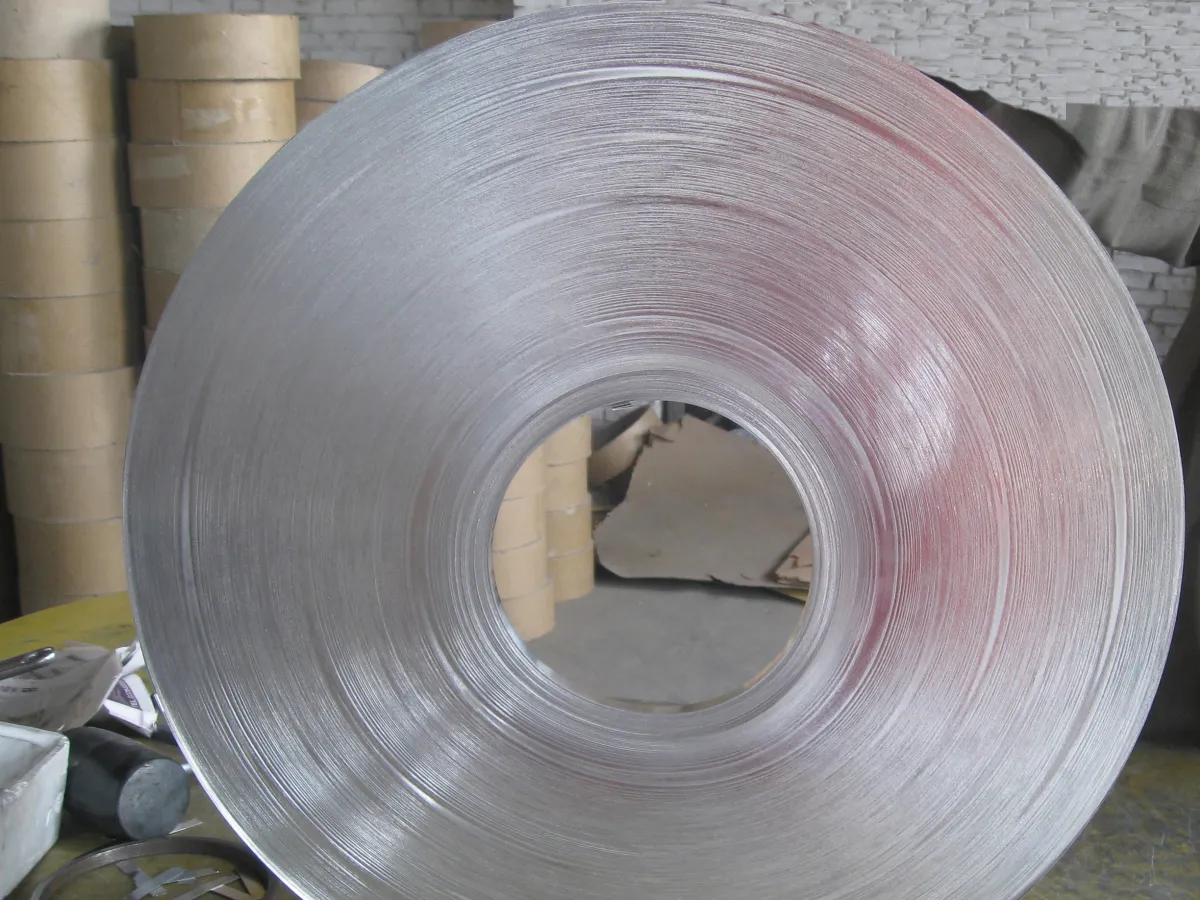
Aluminum strip for packaging refers to aluminum material supplied in narrow or slit coil form for conversion into packaging products and components. Depending on the manufacturing route and final application, the material may also be supplied as wider aluminum coil, sheet or thin aluminum foil.
Packaging manufacturers use aluminum in both standalone and multilayer structures. In some applications, aluminum provides the primary barrier layer. In others, it acts as a formable metal substrate that is coated, printed, laminated or combined with plastic film and paper.
1.1 Main Functions of Aluminum in Packaging
- Barrier protection: Aluminum foil can provide an effective barrier against light, moisture, oxygen and external contamination when the material and packaging structure are properly designed.
- Formability: Appropriate alloys and tempers allow aluminum to be rolled, stamped, drawn, folded or formed into packaging components.
- Heat-sealing compatibility: Coated aluminum foil can be integrated into heat-sealable packaging structures.
- Surface finishing: Aluminum can be lacquered, printed, anodized where appropriate, or laminated with other materials.
- Lightweight construction: Aluminum offers a relatively low material weight compared with many alternative metal packaging substrates.
- Recyclability: Aluminum is recyclable, although actual recovery depends on collection systems and the design of multilayer packaging structures.
1.2 Aluminum Strip, Aluminum Coil and Aluminum Foil
These terms are sometimes used interchangeably in commercial discussions, but they do not describe exactly the same product.
| Product | Description | Typical Processing |
|---|---|---|
| Aluminum foil | Very thin rolled aluminum material | Wrapping, lamination, printing and lidding |
| Aluminum strip | Narrow aluminum material, often produced by slitting wider coil | Stamping, forming, closure manufacturing and component production |
| Aluminum coil | Rolled aluminum supplied in coil form, available in different widths and thicknesses | Slitting, coating, stamping and further rolling or conversion |
| Aluminum sheet | Flat aluminum material supplied in cut lengths | Cutting, forming, drawing and fabrication |
For procurement purposes, buyers should define the actual product dimensions and delivery form instead of relying only on the commercial name.
2. Main Applications of Packaging Aluminum Strip and Foil
2.1 Flexible Food Packaging
Aluminum foil is frequently used as a barrier layer in flexible food packaging. It can be laminated with polyethylene, polypropylene, polyester, paper or other packaging materials to create structures designed for specific food products and filling conditions.
Typical applications include:
- Snack and confectionery packaging
- Coffee and tea packaging
- Powdered food packaging
- Dairy and beverage packaging
- Retort and high-barrier flexible pouches
- Food wrapping and household foil
For these applications, material selection should consider foil thickness, pinhole requirements, surface cleanliness, tensile properties, elongation and compatibility with the laminating adhesive or coating system.
2.2 Pharmaceutical Packaging
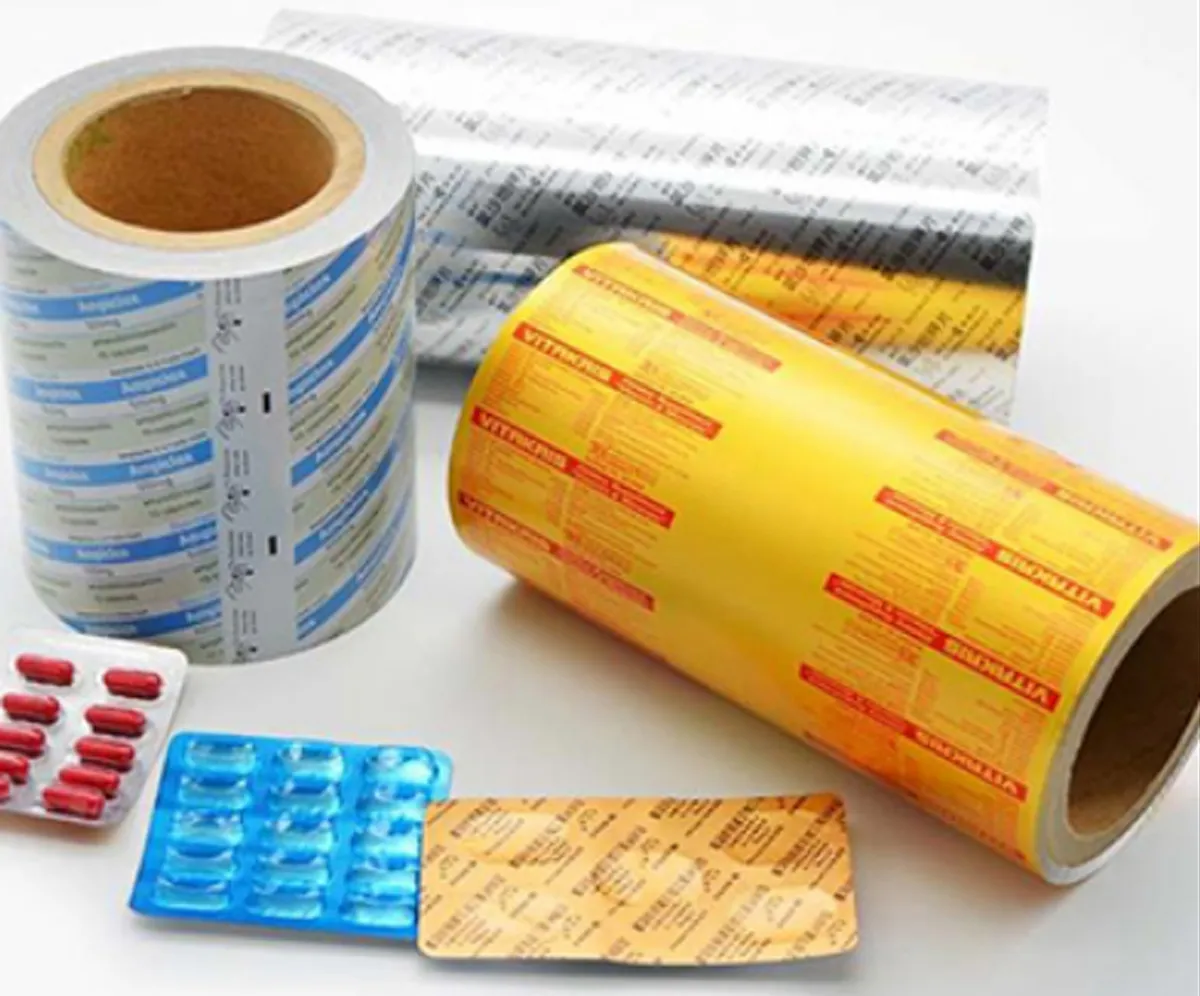
Aluminum foil is an important component in pharmaceutical packaging because it can provide a barrier against moisture, light and other external factors.
Typical applications include:
- PTP blister packaging
- Pharmaceutical lidding foil
- Cold-form blister packaging structures
- Pharmaceutical sachets
- Selected medical and healthcare packaging laminates
Hard-temper aluminum foil may be used for certain blister lidding applications where stiffness, printing and forming characteristics are required. Soft-temper foil is used in other packaging structures depending on the converting process.
Pharmaceutical packaging requires application-specific quality control. Buyers should define pinhole limits, coating performance, printability, surface cleanliness, traceability and any relevant regulatory requirements before placing an order.
2.3 Bottle Caps and Aluminum Closures
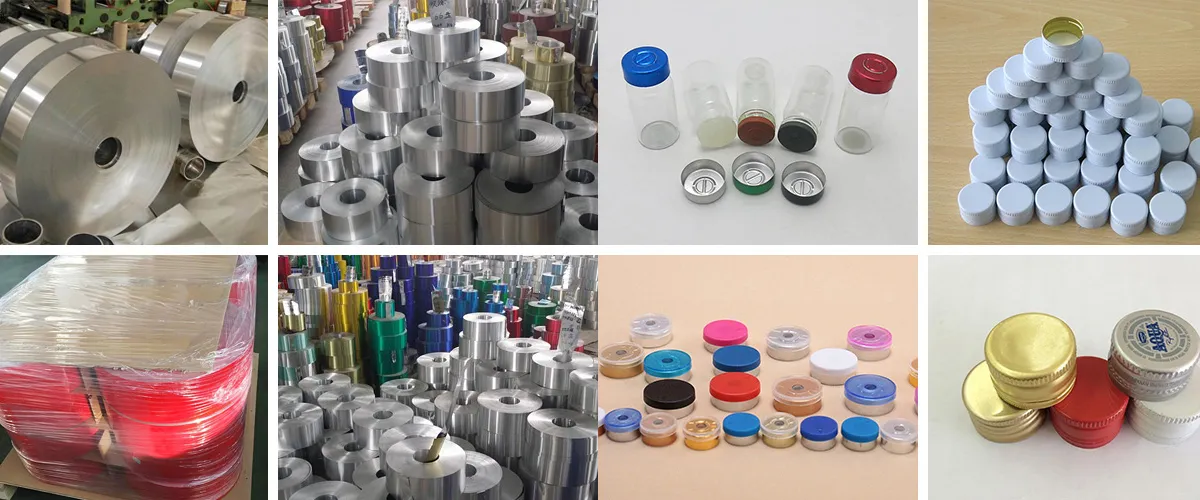
Aluminum strip and coil are used to manufacture different types of closures for beverage, wine, spirits, pharmaceutical and other containers.
Typical products include:
- ROPP aluminum closures
- Screw caps for wine and spirits
- Selected beverage bottle closures
- Pharmaceutical vial seals and closure components
- Decorative and pilfer-proof closure components
Alloy 8011 is commonly considered for aluminum closure stock. The appropriate temper depends on the closure geometry, forming depth, wall thickness, coating system and production equipment.
Buyers should evaluate earing, forming cracks, coating adhesion, hardness, surface finish and dimensional consistency. A material that performs well in flat-foil applications may not necessarily perform well in deep drawing or closure forming.
2.4 Laminated Packaging
Aluminum foil can be combined with plastic films and paper to manufacture multilayer packaging materials. The aluminum layer contributes barrier performance, while the other layers provide mechanical support, sealing properties, printability or product-contact functions.
Common structures may include:
- Aluminum foil / polyethylene
- Polyester film / aluminum foil / polyethylene
- Paper / aluminum foil / polymer film
- Multilayer structures using adhesives and functional coatings
The exact layer arrangement depends on the packaging design. Aluminum suppliers should confirm the intended lamination process and surface requirements with the buyer.
2.5 Food Containers and Semi-Rigid Packaging
Aluminum material is also used for food containers, trays, lids and other semi-rigid packaging components. These products generally require more forming strength and shape retention than very thin flexible packaging foil.
Depending on the component, alloys such as 3003, 3004 and 8006 may also be considered. Therefore, 8011, 8079, 1235 and 1060 should not be treated as a complete alloy list for every packaging application.
2.6 Other Industrial Packaging Uses
Additional applications include decorative packaging, household products, protective wrapping, industrial barrier materials and selected packaging-related stamped components.
The material specification should reflect the actual service conditions and manufacturing process rather than a general packaging classification.
3. Aluminum Alloy Selection: 8011 vs 8079 vs 1235 vs 1060
Alloy selection is one of the most important steps in packaging material procurement. Different aluminum alloy systems have different chemical compositions and mechanical characteristics. Even within the same alloy designation, production route, thickness and temper can affect final performance.
3.1 8011 Aluminum Alloy
8011 is an 8xxx-series aluminum alloy containing iron and silicon as its principal alloying elements. It is commonly used in aluminum foil and packaging-related materials.
Typical applications:
- Household aluminum foil
- Food packaging foil
- Lidding foil
- Selected pharmaceutical foil products
- Aluminum bottle closure stock
Important selection factors:
- Required temper and mechanical properties
- Forming depth and closure geometry
- Surface finish and coating compatibility
- Foil pinhole requirements where applicable
- Slitting and edge quality
8011 should not be specified only by alloy designation. Buyers should also provide the required product form, temper, thickness, dimensions and intended manufacturing process.
3.2 8079 Aluminum Alloy
8079 is another 8xxx-series aluminum alloy used in selected thin-gauge foil applications. It is considered for packaging structures where foil rolling performance, elongation, barrier-layer requirements and converting characteristics are important.
Typical applications:
- Flexible packaging foil
- Selected pharmaceutical packaging foil
- Composite and laminated packaging
- Thin-gauge barrier materials
The suitability of 8079 depends on the required foil gauge, temper, mechanical properties and downstream conversion process. Buyers should evaluate pinhole performance and actual lamination results rather than assuming that the alloy designation alone guarantees barrier performance.
3.3 1235 Aluminum Alloy
1235 is a commercially pure aluminum designation frequently used in thin aluminum foil production. Its applications include household foil, flexible packaging and laminated foil structures.
Typical applications:
- Household foil
- General packaging foil
- Flexible packaging laminates
- Selected industrial wrapping applications
Its relatively high aluminum content and formability make it suitable for selected thin-foil applications. The final performance still depends on foil thickness, rolling quality, temper and converting requirements.
3.4 1060 Aluminum Alloy
1060 is a commercially pure aluminum alloy with a minimum aluminum content of approximately 99.6% under commonly used alloy composition specifications.
Its characteristics include high plasticity, good corrosion resistance and good general formability.
Potential packaging-related applications:
- Selected formed aluminum components
- Specific closure and sealing components
- Decorative and surface-treated parts
- Other packaging components requiring suitable forming characteristics
1060 is not automatically the best choice for thin packaging foil. Buyers should verify whether its mechanical properties and processing characteristics are suitable for the intended foil or strip application.
3.5 Alloy Comparison Table
| Comparison Item | 8011 | 8079 | 1235 | 1060 |
|---|---|---|---|---|
| Alloy series | 8xxx | 8xxx | 1xxx | 1xxx |
| Common product form | Foil, strip, coil | Foil | Foil, foil stock | Sheet, strip, foil |
| Packaging relevance | High | High | High | Application-specific |
| Flexible packaging | Common | Common | Common | Project-specific |
| Closure stock | Common candidate | Project-specific | Project-specific | Selected applications |
| Surface treatment | Depends on product | Depends on product | Depends on product | Depends on product |
The table is a preliminary selection guide. It is not a ranking of alloy quality. Final selection requires technical evaluation of chemical composition, mechanical properties, thickness, temper and processing performance.
4. Aluminum Temper Selection: O, H18 and Other Conditions
Temper describes the condition of aluminum material resulting from annealing, strain hardening and, where applicable, thermal treatment. For packaging applications, temper affects strength, hardness, elongation and forming behavior.
4.1 O Temper: Annealed Aluminum
O temper represents an annealed condition. It is commonly considered when high flexibility, elongation or forming capability is required.
Potential applications:
- Household aluminum foil
- Flexible packaging foil
- Selected laminated packaging materials
- Soft foil products requiring folding or wrapping
For O-temper foil, buyers should pay attention to elongation, tensile strength, surface condition, pinholes and roll handling performance.
4.2 H18 Temper: Full-Hard Material
H18 is a strain-hardened condition commonly described as full hard. It provides higher strength and hardness than an annealed condition of the same alloy and comparable product form.
Potential applications:
- Selected pharmaceutical lidding foil
- Rigid or semi-rigid thin foil components
- Packaging components requiring greater stiffness
- Applications where the converting process is designed for hard-temper foil
H18 should not be selected simply because higher hardness is preferred. Excessive hardness may cause cracking or other forming problems in applications requiring substantial deformation.
4.3 H14 and H16 Tempers
H14 and H16 are strain-hardened conditions with different strength levels. They may be considered for selected closure stock and other formed packaging components.
The appropriate condition depends on forming depth, wall thickness, final geometry, springback, coating and equipment capability.
4.4 Temper Selection by Packaging Application
| Application | Potential Temper | Important Considerations |
|---|---|---|
| Household foil | O | Flexibility, folding and rolling quality |
| Flexible packaging foil | O | Elongation, surface and lamination performance |
| Selected pharmaceutical foil | O or H18 | Product construction and converting requirements |
| Aluminum bottle caps | H14, H16 or other specified condition | Formability, hardness and closure geometry |
| Formed packaging components | Project-specific | Drawing depth, strength and springback |
These are typical selection considerations rather than guaranteed supply combinations. Buyers should specify the required temper according to the applicable alloy and product standard.
5. Packaging Foil, Laminated Foil, Bottle Cap Stock and Container Stock: Key Differences
One common procurement mistake is treating every packaging aluminum product as the same material. The actual product form and manufacturing process determine which properties should be prioritized.
5.1 Flexible Packaging Foil
Flexible packaging foil is generally thin aluminum foil used in wrapping and multilayer packaging structures.
Important requirements include:
- Thickness consistency
- Pinhole control
- Surface cleanliness
- Suitable mechanical properties
- Wettability and lamination compatibility
- Stable winding and rewinding performance
5.2 Laminated Packaging Foil
Laminated packaging foil is combined with plastic film, paper or other materials. Aluminum acts as one functional layer in a complete packaging structure.
Material qualification should consider:
- Adhesive compatibility
- Surface energy and wettability
- Bonding strength after lamination
- Printing and coating compatibility
- Heat-sealing and converting conditions
- Performance after storage and environmental exposure
5.3 Bottle Cap and Closure Stock
Closure stock is generally thicker than flexible packaging foil and is designed for stamping, drawing, forming or rolling into closure shapes.
Important characteristics include:
- Thickness and width tolerance
- Tensile strength and elongation
- Hardness consistency
- Earing and forming behavior
- Surface appearance
- Coating adhesion and corrosion protection
- Slitting edge quality
5.4 Aluminum Container and Tray Stock
Container and tray stock is designed for pressing, drawing and forming into semi-rigid packaging products. These products may require different alloy systems and tempers from flexible foil.
Buyers should evaluate wall thinning, wrinkling, earing, lubrication, forming load and final shape retention.
5.5 Product Comparison
| Product Type | Main Process | Priority Quality Factors |
|---|---|---|
| Flexible foil | Rewinding and converting | Pinhole, gauge and surface |
| Laminated foil | Adhesive lamination and printing | Wettability, cleanliness and bond performance |
| Closure stock | Stamping and forming | Hardness, earing and forming behavior |
| Container stock | Drawing and pressing | Elongation, strength and shape retention |
6. Thickness, Width and Dimensional Specifications
Packaging aluminum material must be ordered according to measurable dimensions. Small variations in thickness or width can affect material consumption, forming stability, lamination and production efficiency.
6.1 Thickness Requirements
Aluminum foil and strip thickness depends on the packaging structure and manufacturing process.
Common product categories include:
- Thin foil for flexible packaging and barrier layers
- Medium-gauge foil for lidding and selected packaging structures
- Thicker strip and coil for closures and formed components
The buyer should provide nominal thickness, allowable tolerance, measurement method and sampling frequency. A supplier quotation should clearly state whether the tolerance is based on a recognized standard or a separately agreed technical specification.
6.2 Width and Slitting Requirements
Packaging converters often require specific slit widths to match their production lines.
Width requirements should include:
- Nominal finished width
- Width tolerance
- Number of slit coils
- Minimum and maximum slit width where relevant
- Edge trimming requirements
- Winding direction and coil configuration
6.3 Coil Inner Diameter and Outer Diameter
Coil dimensions must be compatible with the customer's decoiling and handling equipment.
Important parameters include:
- Coil inner diameter (ID)
- Coil outer diameter (OD)
- Maximum coil weight
- Core material
- Winding direction
- Coil stability and telescoping limits
6.4 Edge Quality and Burr Control
Slitting may produce burrs along the edges of aluminum strip. Excessive burrs can cause handling risks, damage protective films, affect winding quality and interfere with downstream forming.
Buyers should define:
- Maximum acceptable burr height
- Whether burr direction must be controlled
- Edge trimming and squareness requirements
- Whether sharp edges or cracks are acceptable
- Inspection method and acceptance criteria
6.5 Example RFQ Dimension Table
| Parameter | Buyer Specification |
|---|---|
| Alloy | 8011 / 8079 / 1235 / 1060 or specified grade |
| Temper | O / H18 / H14 / H16 or project-specific condition |
| Thickness | Specify in mm |
| Thickness tolerance | Specify allowable deviation |
| Width | Specify finished width in mm |
| Width tolerance | Specify allowable deviation |
| Coil ID | Specify in mm |
| Coil OD | Specify maximum OD in mm |
| Coil weight | Specify preferred weight range |
| Edge condition | Trimmed edge and agreed burr limit |
| Surface | Mill finish, bright, matte, coated or other agreed condition |
7. Surface Quality and Processing Requirements
Surface quality is particularly important for packaging aluminum because the material may be printed, coated, laminated, heat-sealed or exposed to direct forming operations.
7.1 Surface Defects to Control
- Oil stains and excessive residual rolling oil
- Scratches and abrasion marks
- Oxidation and water stains
- Black spots and surface contamination
- Roll marks and pressure marks
- Surface pits and inclusions
- Edge cracks and slitting damage
Not every surface mark has the same impact on every packaging product. Buyers should establish acceptance criteria according to the intended application and inspection method.
7.2 Bright and Matte Surfaces
Aluminum foil may have bright and matte sides depending on the rolling process. The required surface condition should be stated when appearance, printing, coating or lamination performance is important.
Buyers should also identify which side is intended for printing, coating or adhesive application.
7.3 Degreasing and Surface Cleanliness
Residual oil may affect printing, coating and adhesive bonding. Depending on the process, customers may require degreased material or a specified surface cleanliness condition.
The cleaning process and acceptance method should be agreed before production. A general statement such as "clean surface" is not sufficient for demanding applications.
7.4 Coating, Lacquering and Printing
Packaging aluminum may be supplied with different surface treatments, including:
- Heat-seal lacquer
- Protective coating
- Color coating
- Printing-compatible surface treatment
- Other customer-specified coatings
Coating requirements should identify the coating type, coated side, target coating weight or thickness where applicable, curing conditions, adhesion criteria and compatibility with the packaging material.
8. Quality Inspection and Material Verification
A reliable packaging aluminum supply program requires more than checking the alloy designation on a coil label. Incoming inspection should verify the material against the purchase specification and the agreed acceptance criteria.
8.1 Chemical Composition
Chemical composition should be checked against the specified alloy designation and applicable material standard.
Buyers may request a material test certificate or certificate of analysis containing the relevant chemical composition results and batch identification.
8.2 Mechanical Properties
Depending on the product, testing may include:
- Tensile strength
- Yield strength where specified
- Elongation
- Hardness
Mechanical properties should be evaluated according to the specified alloy, temper, thickness and applicable test method. Values from a different thickness range or production route should not be substituted without technical approval.
8.3 Thickness and Width Inspection
Dimensional inspection should confirm that actual thickness and width meet the purchase specification.
For thin foil, measurement equipment and procedures must be suitable for the material gauge. Sampling locations should also be agreed because variation may occur across the width and along the coil.
8.4 Pinhole Inspection
Pinhole inspection is particularly important for thin aluminum foil used in flexible barrier packaging and pharmaceutical applications.
A pinhole acceptance specification should define:
- Inspection method
- Inspection area or sampling length
- Maximum permitted pinhole count
- Permitted pinhole size where applicable
- Acceptance and rejection criteria
A pinhole limit should not be invented or copied from another product without confirming the required foil thickness and application.
8.5 Lamination and Coating Tests
For laminated and coated packaging material, relevant evaluations may include:
- Surface wettability
- Adhesion or bond strength
- Coating continuity
- Heat-seal performance of the complete structure
- Appearance after printing and lamination
- Performance under agreed environmental conditions
These tests may require cooperation between the aluminum producer, packaging converter and finished-packaging manufacturer.
8.6 Incoming Inspection Checklist
| Inspection Item | Verification Method | Acceptance Basis |
|---|---|---|
| Alloy and temper | Certificate and material identification | Purchase specification |
| Thickness | Suitable thickness gauge | Agreed tolerance |
| Width | Dimensional measurement | Agreed tolerance |
| Mechanical properties | Laboratory testing | Applicable material specification |
| Surface | Visual inspection and agreed tests | Approved surface criteria |
| Edge condition | Visual and burr measurement | Agreed edge specification |
| Pinhole | Specified foil inspection method | Application-specific limit |
| Coil condition | Visual and dimensional inspection | Approved packing and coil criteria |
| Traceability | Labels and certificates | Purchase documentation |
9. Relevant Standards and Technical Documentation
Packaging aluminum should be purchased against a clearly identified material specification. The correct standard depends on the alloy, product form, thickness and final application.
9.1 ASTM B479
ASTM B479 covers annealed aluminum and aluminum-alloy foil for flexible barrier, food-contact and other applications. Its published scope includes alloys such as 1100, 1145, 1235, 8011 and 8079.
The standard covers foil from 0.00025 inch (0.0064 mm) to less than 0.006 inch (0.15 mm). Buyers should confirm the applicable edition and full requirements before specifying it in a purchase order.
Official reference: ASTM B479 - Standard Specification for Annealed Aluminum and Aluminum-Alloy Foil.
9.2 Other Applicable Specifications
Depending on the material and destination market, purchasers may also refer to relevant EN, ISO, JIS or GB standards.
The following points should be confirmed:
- Exact standard number and revision
- Alloy designation and chemical composition
- Temper designation
- Dimensional tolerance requirements
- Mechanical property requirements
- Inspection and sampling methods
- Required test certificates
Food-contact and pharmaceutical compliance must be evaluated separately from the base aluminum alloy specification. A material certificate alone does not establish compliance of the complete packaging structure with all applicable food-contact or pharmaceutical regulations.
10. How to Evaluate a Packaging Aluminum Strip Supplier
Selecting an aluminum supplier should involve a technical review rather than relying only on the quoted price. Differences in rolling quality, slitting accuracy, surface control and documentation can affect the performance of the customer's packaging production line.
10.1 Alloy and Temper Control
Ask the supplier how alloy identity, temper and material traceability are controlled. Request documentation that links the supplied coil to its production batch.
10.2 Rolling and Slitting Capability
Confirm whether the supplier can produce the required thickness, width and coil configuration. For narrow strip, ask about slitting edge quality, burr control, winding stability and dimensional inspection.
10.3 Surface Quality Management
Packaging materials may be sensitive to oil, scratches, oxidation and contamination. Discuss inspection procedures and the supplier's ability to meet the specified surface condition.
10.4 Documentation and Traceability
Depending on the order, buyers may request:
- Material Test Certificate (MTC)
- Certificate of Analysis (COA)
- Chemical composition report
- Mechanical property report
- Dimensional inspection report
- Surface inspection records
- Coil and batch identification records
- Customer-specific compliance documents where applicable
10.5 Sample and Trial Production
For demanding applications, sample qualification is recommended before full-scale purchasing.
A practical evaluation process may include:
- Review the material specification and packaging drawing.
- Obtain a sample coil or trial material.
- Check dimensions, mechanical properties and surface condition.
- Run the material through the customer's converting equipment.
- Evaluate stamping, lamination, printing, sealing or forming performance as applicable.
- Record test results and approve the material specification before mass production.
The approval criteria should be established jointly by the buyer and supplier. A successful laboratory test does not automatically guarantee satisfactory performance on a production line.
11. Aluminum Strip for Packaging: RFQ Template
A complete Request for Quotation (RFQ) helps suppliers evaluate the material requirements and reduces the risk of specification misunderstandings.
Buyers can use the following template when requesting a quotation.
Packaging Aluminum Strip RFQ Information
| Item | Information to Provide |
|---|---|
| Company | Company name and contact information |
| Application | Flexible packaging, food foil, pharmaceutical foil, bottle caps, laminated foil or other use |
| Alloy | 8011 / 8079 / 1235 / 1060 / other specified alloy |
| Temper | O / H18 / H14 / H16 / other specified condition |
| Thickness | Nominal thickness in mm |
| Thickness tolerance | Required tolerance |
| Width | Required finished width in mm |
| Width tolerance | Required tolerance |
| Coil ID and OD | Required inner and outer diameters |
| Coil weight | Preferred weight per coil |
| Surface condition | Bright, matte, mill finish, degreased, coated or laminated |
| Edge requirement | Trimmed edge and maximum burr height |
| Mechanical requirements | Tensile strength, elongation and hardness where applicable |
| Special requirements | Pinhole limits, wettability, coating adhesion or other application-specific requirements |
| Standard | ASTM, EN, JIS, GB or customer specification |
| Quantity | Trial order and estimated annual consumption |
| Documentation | MTC, COA, inspection reports and other agreed documents |
| Destination | Country, port or delivery address |
Sample RFQ Email
Subject: Inquiry for Aluminum Strip / Foil for Packaging Applications
Dear Sales Team,
We are looking for aluminum material for our packaging production and would like to request your technical information and quotation.
Required specifications:
- Application: [Flexible packaging / Bottle caps / Pharmaceutical foil / Other]
- Alloy: [8011 / 8079 / 1235 / 1060]
- Temper: [O / H18 / H14 / H16]
- Thickness: [____ mm]
- Thickness tolerance: [____]
- Width: [____ mm]
- Width tolerance: [____]
- Coil ID / OD: [____ / ____ mm]
- Surface finish: [____]
- Edge requirement: [____]
- Quantity: [____ MT]
- Required standard: [____]
- Destination: [____]
Please provide your available specifications, technical data, minimum order quantity, sample availability, production lead time and quotation.
Please also confirm whether material certificates and dimensional inspection reports can be supplied.
Best regards,
[Name]
[Company]
12. Common Procurement Mistakes in Packaging Aluminum
Mistake 1: Selecting Alloy Without Defining the Application
8011, 8079, 1235 and 1060 have different material characteristics. The same alloy may also behave differently in different tempers and thickness ranges.
Solution: Provide the final product application and converting process before confirming the alloy.
Mistake 2: Confusing Aluminum Foil with Closure Strip
Flexible foil and bottle closure stock have different dimensional and mechanical requirements.
Solution: Specify the actual product form and manufacturing process.
Mistake 3: Ordering Without a Defined Surface Requirement
Surface contamination, scratches and residual oil may affect printing, coating and lamination.
Solution: Define the required surface condition and acceptance method.
Mistake 4: Ignoring Slitting Burrs
Poor edge quality can damage equipment and reduce production stability.
Solution: Specify acceptable burr height, edge trimming and inspection requirements.
Mistake 5: Relying Only on a Material Certificate
An alloy certificate does not demonstrate that the material will perform correctly in every packaging process.
Solution: Combine document review, incoming inspection and production trials for critical applications.
13. Frequently Asked Questions About Aluminum Strip for Packaging
What is the best aluminum alloy for packaging?
There is no single best alloy for every packaging application. 8011, 8079 and 1235 are commonly considered for aluminum packaging foil, while 8011 is also used in selected closure stock applications. 1060 may be considered for specific formed components. The correct alloy depends on the final product and manufacturing process.
Is 8011 aluminum suitable for food packaging?
8011 is commonly used in selected food packaging foil and lidding applications. Suitability for a particular food-contact application depends on the material specification, surface treatment, coatings, complete packaging structure and applicable regulatory requirements.
What is the difference between 8011 and 8079 aluminum foil?
Both are 8xxx-series alloys used in selected packaging foil applications. Their composition and processing characteristics differ. Buyers should compare the required thickness, temper, mechanical properties, pinhole performance and converting results before selecting one.
Is 1235 aluminum foil suitable for laminated packaging?
Yes. 1235 aluminum foil is used in selected flexible and laminated packaging structures. The material should be qualified for the required foil gauge, surface condition, wettability and lamination process.
What is the difference between O temper and H18 temper?
O temper is an annealed, relatively soft condition with high formability. H18 is a full-hard strain-hardened condition with higher strength and hardness. The correct temper depends on whether the packaging process requires flexibility, forming capability or stiffness.
Can H18 aluminum foil be used for flexible packaging?
H18 may be used in selected packaging applications where its mechanical properties are suitable. However, many flexible packaging structures require soft-temper foil. The choice should be confirmed through the converting process and finished-package requirements.
What thickness is used for packaging aluminum foil?
Thickness varies widely according to the packaging structure. Thin foil may be used in flexible barrier laminates, while lidding foil and closure stock require different gauges. Buyers should specify the exact thickness and tolerance rather than relying on a general packaging range.
Why are pinholes important in packaging aluminum foil?
Pinhole defects can reduce the barrier performance of thin aluminum foil. This is particularly important for food, pharmaceutical and other sensitive packaging structures. The permitted pinhole level should be specified according to the application and foil thickness.
What information should be included in an aluminum packaging RFQ?
An RFQ should include alloy, temper, thickness, width, tolerances, coil dimensions, surface finish, edge requirements, application, quantity, applicable standard, inspection documents and delivery destination.
Can aluminum strip be supplied in customized widths?
Aluminum coil can be slit into narrower strips where the supplier has suitable processing capability. Buyers should provide the finished width, tolerance, required number of coils, coil weight and edge-quality requirements.
Does aluminum foil automatically meet food-contact requirements?
No. The base aluminum alloy designation alone does not establish compliance with all food-contact requirements. Coatings, inks, adhesives, other packaging layers and the intended food-contact conditions must also be considered.
How can buyers verify packaging aluminum quality?
Buyers should review material certificates, dimensional inspection results, mechanical test data and surface inspection records. Depending on the application, pinhole testing, coating adhesion, wettability and production trials may also be necessary.
14. Conclusion: Selecting the Right Aluminum Material for Packaging
Aluminum strip and foil are used in a wide range of packaging applications, from flexible food packaging and pharmaceutical foil to bottle closures and formed packaging components.
The correct material selection requires more than choosing an alloy number. Buyers must consider alloy, temper, thickness, width, surface condition, edge quality, mechanical properties and downstream processing requirements together.
For flexible packaging, 8011, 8079 and 1235 are important alloy options to evaluate. For bottle closures, 8011 is a common candidate, with temper and forming performance requiring careful confirmation. 1060 may be suitable for selected formed components where its material characteristics match the design.
Before placing an order, packaging manufacturers should establish measurable specifications, confirm applicable standards, review supplier documentation and conduct production trials where necessary.
A technically complete specification helps reduce material mismatch, production interruptions and avoidable quality disputes.
Request a Quotation for Packaging Aluminum Strip and Foil
Looking for 8011, 8079, 1235 or 1060 aluminum material for packaging production?
Send your alloy, temper, thickness, width, tolerance, coil configuration, surface requirements and intended application to our technical sales team.
Haomei Aluminium
Email: [email protected]
Phone: +86-371-65621391