Quick answer: how to specify aluminum strip for transformer windings
Transformer winding aluminum strip should be specified by its complete alloy and temper, measured electrical property, thickness and width tolerances, coil dimensions, edge condition, surface requirements and insulation arrangement. High-purity grades such as 1050, 1060 and 1070 may be evaluated where conductivity and formability are priorities, but the correct choice depends on the transformer design and verified test results.
- Do not select a grade by alloy number alone; request lot-linked electrical and mechanical data.
- Define burr height, edge profile and dimensional tolerances in measurable terms.
- Do not substitute aluminum for copper without redesign and qualification of the winding and connections.
- Confirm the applicable product standard and test method separately.
Aluminum strip for transformer windings is a flat-rolled conductor material selected as part of a complete electrical and mechanical design. The grade name alone does not establish whether a strip is suitable. Buyers and transformer engineers need to specify electrical resistivity or conductivity, temper, dimensions, edge condition, surface cleanliness, insulation arrangement and inspection requirements together.
This guide is written for transformer manufacturers, winding engineers and procurement teams evaluating aluminum strip for distribution transformers, dry-type transformers, oil-immersed transformers and reactor coils. Final suitability must be confirmed against the transformer design, applicable product specification and qualification tests.
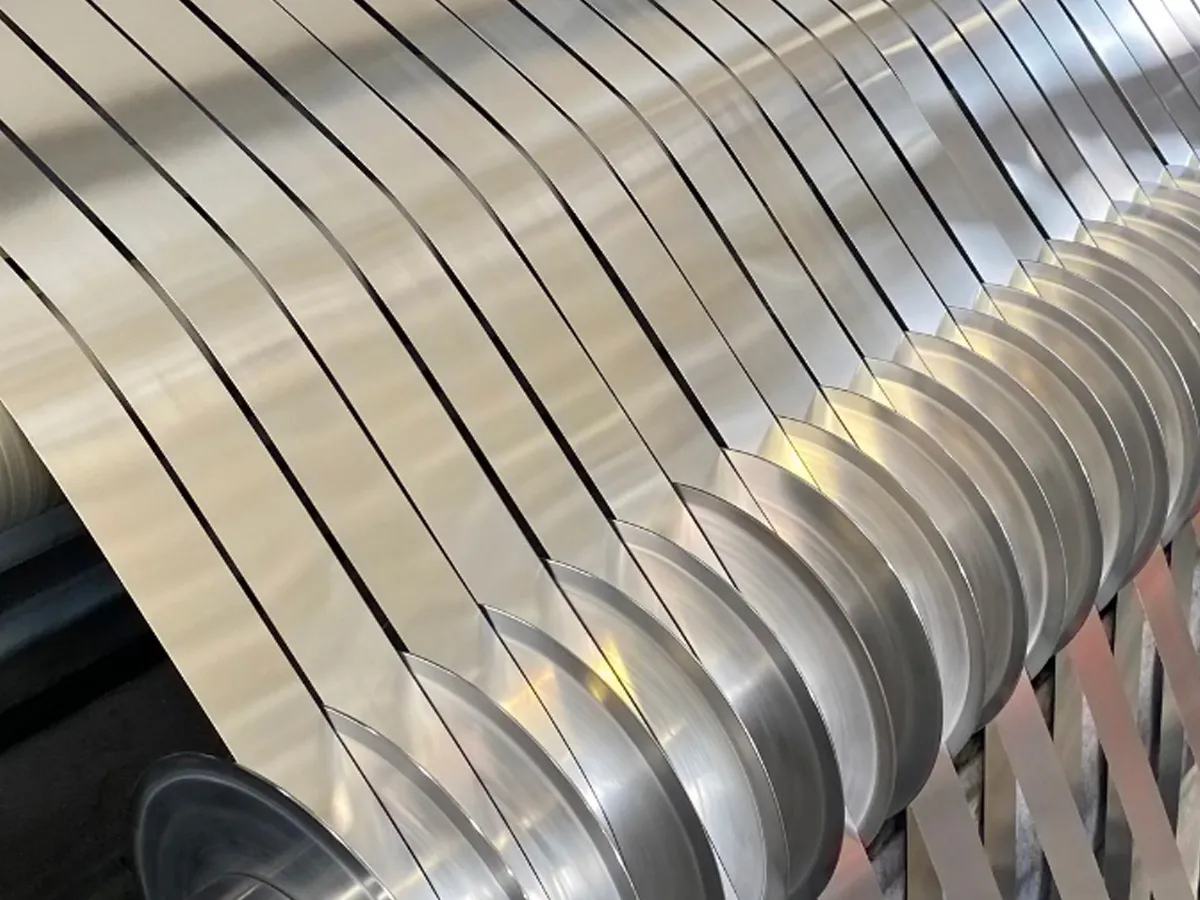
1. What transformer manufacturers need from aluminum winding strip
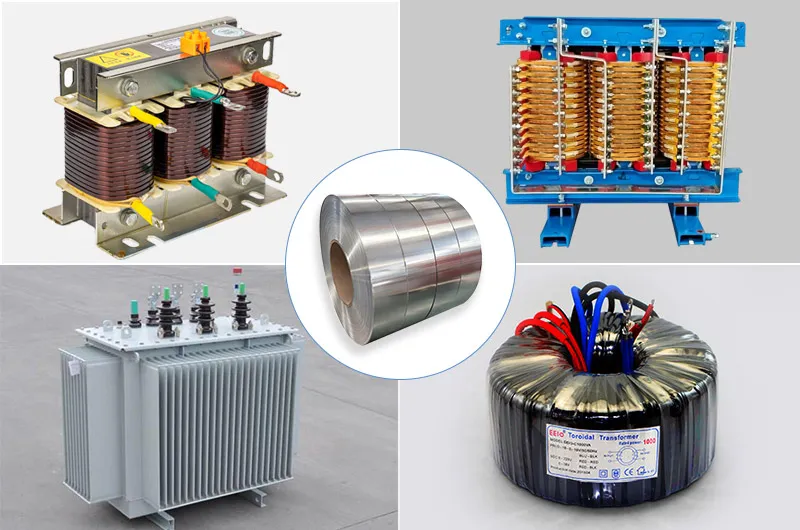
Transformer winding conductors carry current while forming a coil with defined geometry, insulation clearances and thermal paths. Aluminum is considered in some designs because its density is lower than copper and it can be supplied as flat strip or foil for winding processes. Those advantages do not remove the need for electrical, thermal, mechanical and connection-design calculations.
When evaluating a proposed strip, the engineering team should answer these questions before approving the material:
- What conductor cross-section and electrical resistance are required by the winding design?
- What operating current, temperature rise, cooling arrangement and loss target apply?
- What winding tension, bend radius, forming sequence and dimensional stability are required?
- Will the conductor be used bare, wrapped, coated or insulated in a separate operation?
- How will joints, terminals and dissimilar-metal interfaces be designed and protected?
- Which inspection records and acceptance limits must accompany each production lot?
These questions are more useful than selecting a grade from a generic “best alloy” list. The final material must work as part of the complete winding system.
2. Aluminum strip alloy selection for transformer applications
High-purity aluminum grades are commonly considered when electrical conductivity and forming performance are priorities. Other alloys may offer higher strength or different processing characteristics, but alloying additions generally change the electrical and mechanical balance. The purchaser should therefore compare certified properties for the exact product form and temper rather than rely on a grade label or a generic table.
| Alloy designation | What the source material indicates | Evaluation point for transformer use |
|---|---|---|
| 1050 | High-purity aluminum; considered where conductivity and formability are important. | Confirm the required conductivity/resistivity, temper, thickness range and mechanical properties on the supplier's certificate. |
| 1060 | High-purity aluminum; considered for conductivity and ductility. | Compare measured electrical properties and winding behavior with the project acceptance criteria; do not assume a fixed conductivity from the designation alone. |
| 1070 | Higher aluminum content than many general-purpose wrought alloys. | Evaluate only against a defined electrical and mechanical specification and verified supply documentation. |
| 1350 | Identified in the source text as an electrical-conductor grade. | Confirm the applicable product standard, product form, temper, availability and traceable test results. Do not assume it is available from every supplier. |
| 3003 | Manganese-alloyed material with useful formability and strength characteristics. | It is not automatically the preferred choice where maximum conductivity is the primary requirement. Require engineering approval for the intended conductor function. |
| 5052 | Higher-strength alloy family relative to commercially pure grades. | Assess whether its strength advantage is actually needed; verify electrical performance before considering it for a current-carrying winding conductor. |
How to make the selection: define the minimum electrical performance first, then check the mechanical requirements of winding and assembly. If two grades satisfy the electrical requirement, compare formability, edge behavior, supply consistency, documentation and total delivered cost. No alloy in this table is approved for a particular transformer design by this general guide.
3. O temper and H temper: specify the actual condition
Temper describes the material condition resulting from processing such as annealing or strain hardening. It affects strength, ductility, springback and forming response. The source material identifies O temper as a soft condition often considered for winding operations, while H tempers represent strain-hardened conditions with different mechanical properties.
- O temper: annealed condition. It is often evaluated where high ductility and easier forming are needed. Confirm that the strip has enough strength and dimensional stability for the winding process.
- H tempers: strain-hardened conditions. The exact H designation matters; do not treat H12, H14, H16 or H18 as interchangeable.
- Project approval: validate the selected temper using the actual strip thickness, bend radius, winding tension and any subsequent forming or joining operation.
Do not specify only “soft aluminum” or “hard aluminum.” State the complete alloy-temper designation and the governing product specification on the purchase order.
4. Thickness, width and coil dimensions
Strip dimensions affect conductor cross-section, winding build, bend radius, coil geometry and compatibility with the winding machine. The example thicknesses from 0.20 mm to 3.00 mm and example widths from 10 mm upward. These are reference examples from the supplied material, not a verified manufacturing capability statement or a promise that every size is available.
For a valid quotation, specify:
- Nominal thickness and permitted thickness tolerance.
- Nominal width and permitted width tolerance.
- Coil inside diameter (ID), outside diameter (OD) and maximum coil mass.
- Required coil length or mass, winding direction and coil stability requirements.
- Whether the order permits coil joints; if permitted, define the joint method, location and marking requirements.
- Flatness, camber and edge profile requirements where they affect the winding line.
Do not accept a supplier's “standard size range” as a substitute for a signed dimensional specification. Confirm tolerance measurement method, sampling frequency and acceptance limits before production.
5. Electrical conductivity and resistivity: request measured evidence
Electrical performance should be specified as a measurable acceptance requirement. A nominal alloy designation or a marketing phrase such as “high conductivity” is not enough. Ask the supplier to state the test method, test temperature or temperature correction basis, sample identification, measured value, units and acceptance limit.
ASTM B193 is a test method for resistivity of electrical conductor materials. It is not a product certification and does not, by itself, establish that a particular aluminum strip meets a customer's complete transformer specification. If conductivity is reported as a percentage of IACS, the parties should agree on the conversion basis and reference temperature and retain the underlying resistivity result where required.
For procurement, request a mill test certificate or inspection report that links the electrical result to the alloy, temper, thickness, heat/lot or coil identification and the agreed test procedure.
6. Slitting quality and edge condition
Transformer winding strip is frequently supplied in coil form and may be slit from a wider coil. Slitting quality matters because the strip edge passes through guides and winding equipment and may sit close to insulation materials. Edge defects can cause handling problems or damage adjacent insulation, depending on the winding design.
Agree measurable acceptance criteria for:
- Burr height and burr direction, including the measurement method and sampling location.
- Edge cracks, tears, sharp projections and local deformation.
- Width consistency, camber and edge waviness.
- Coil telescoping, loose winding, edge alignment and handling stability.
- Whether a square edge, chamfer, radius or other edge treatment is required.
“Burr-free” is not a complete technical specification unless the parties define a measurable limit. If a winding line has a known maximum burr allowance, put that value and its inspection method in the drawing or purchase specification.
7. Surface condition and insulation compatibility
Surface cleanliness and condition should be defined in relation to the customer's insulation and manufacturing process. Oil, loose particles, embedded debris, scratches, dents or other surface defects may affect downstream handling or insulation operations. The acceptance standard should identify which defects are prohibited, which are acceptable and how inspection will be performed.
Distinguish three supply arrangements:
- Bare aluminum strip: the customer applies or assembles the insulation system during transformer production.
- Coated strip: an insulation coating is applied to the conductor. The coating chemistry, thickness, adhesion, dielectric properties and thermal classification must be specified and validated.
- Wrapped strip: insulation paper, film or tape is applied around the conductor. The wrapping material, overlap, coverage, edge protection and qualification requirements must be agreed.
Do not assume that bare aluminum strip has the same dielectric or thermal performance as an insulated conductor. Insulation system approval belongs to the complete transformer design and applicable qualification process.
8. Aluminum strip versus copper strip: compare the complete design
Aluminum has lower density than copper, while copper has higher electrical conductivity for a given cross-sectional area. A transformer designed around one conductor material cannot be converted to the other by a simple one-for-one material substitution.
| Design consideration | Aluminum conductor | Copper conductor |
|---|---|---|
| Electrical conductivity | Lower conductivity per equal cross-sectional area; design calculations must account for resistance and losses. | Higher conductivity per equal cross-sectional area. |
| Density and mass | Lower density; may reduce conductor mass in a suitably redesigned winding. | Higher density; conductor mass is generally higher for comparable geometry. |
| Conductor dimensions | May require a different cross-section and winding arrangement to meet electrical and thermal targets. | Often allows a smaller cross-section for a comparable resistance target, subject to design constraints. |
| Connections | Requires connection design suitable for aluminum, including contact preparation and control of oxide-related interface issues. | Uses copper-compatible connection practices; interfaces still require proper design. |
| Qualification | Requires validation of losses, temperature rise, mechanical strength, short-circuit withstand and connection performance. | Requires the same system-level design and qualification checks. |
Any aluminum-for-copper conversion should be reviewed by the transformer designer. Recalculate conductor area, winding resistance, load losses, temperature rise, winding geometry, insulation clearances, terminal joints, short-circuit forces and manufacturing tolerances. Do not make a replacement decision based only on material price or weight.
9. Standards: identify what each document actually covers
Standards should be selected according to the product form, intended use and contractual specification. A test method, a material product specification, an insulation test standard and a quality-management certification serve different purposes.
| Reference | Role | How to use it correctly |
|---|---|---|
| ASTM B209/B209M | Specification covering aluminum and aluminum-alloy sheet and plate in the scope defined by the standard. | Check whether the ordered alloy, temper, dimensions and product form fall within the applicable edition and scope. Do not assume it automatically covers every narrow slit conductor strip. |
| ASTM B193 | Test method for resistivity of electrical conductor materials. | Use it as a test-method reference when agreed by the purchaser and supplier; it is not a complete product specification. |
| IEC 60851 series | Test methods for winding wires, with individual parts addressing particular test categories. | Use the relevant part only where the supplied product and test are within its scope. It is not a general bare aluminum strip product standard. |
| ISO 9001 | Quality management system standard. | It concerns an organization's quality-management system; it is not a material-property certificate for an individual coil. |
List the exact standard number, edition/year, applicable clauses and any customer-specific additions in the purchase specification. Confirm the current edition and scope before contract release.
10. Inspection documents and traceability checklist
Before shipment approval, the purchaser should agree which documents are required and how each coil will be identified. A practical checklist includes:
- Alloy and temper designation, product specification and order revision.
- Coil or lot identification linked to the packing list and inspection report.
- Chemical composition report where required by the purchase specification.
- Electrical resistivity or conductivity result, test method and reference condition.
- Mechanical test results where required, including specimen direction and thickness range.
- Thickness, width, coil ID/OD, mass and agreed dimensional inspection records.
- Edge/burr and surface inspection results against written acceptance limits.
- Insulation-related test documents where an insulated product is actually ordered.
- Packaging details, coil protection and handling/label information.
Only claim that a certificate, test report or compliance document is supplied if it is available for the actual order and is included in the agreed documentation package.
Packaging, Storage and Delivery
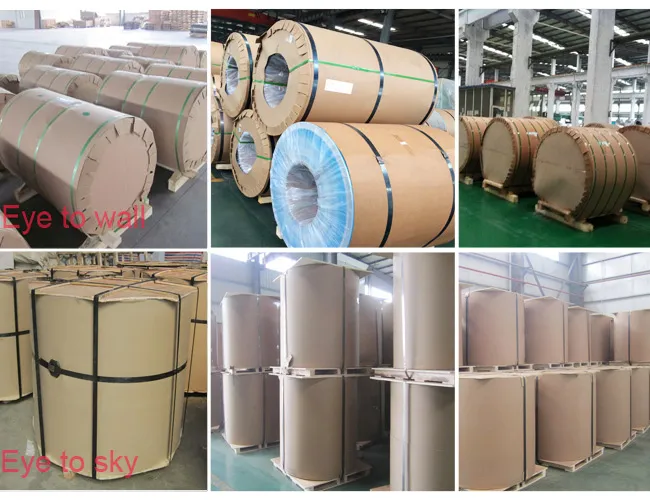
Coil packaging should protect the strip from moisture, edge impact, contamination and movement during transport. The final packing method depends on coil mass, dimensions, shipping route, handling equipment and the buyer's receiving requirements.
- Protect the coil surface and edges with suitable wrapping and edge protection.
- Use a pallet or case designed for the coil's actual mass and lifting method.
- Keep coil labels readable and link each coil to its batch documentation.
- Specify eye-to-sky or eye-to-wall orientation where it affects loading and unloading.
- Store coils in a dry environment and avoid condensation, standing water and direct exposure to weather.
Confirm packing dimensions, gross weight, pallet or case type, loading plan and shipping marks before dispatch. Do not rely on a generic container loading estimate for a shipment without checking the actual coil dimensions and weight distribution.
11. Manufacturing and process controls to discuss with the supplier
The supplied source describes a process sequence that may include raw-material inspection, casting, rolling, annealing, slitting, edge processing, final inspection and packaging. The exact route depends on the producer's manufacturing setup and the ordered product. Buyers should ask which operations are performed in-house and which are subcontracted, and how process records are connected to the finished coil.
For a transformer strip order, discuss controls at the points that can affect the finished product:
- Incoming material: verify alloy identity and traceability to the production lot.
- Rolling and annealing: control thickness, temper and the properties required by the agreed specification.
- Slitting: control width, edge condition, burr and coil build.
- Final inspection: check dimensions, appearance, identification and required test records.
- Packing: protect edges and surfaces from impact, moisture, contamination and movement during transport.
Do not publish a process capability, inspection frequency or defect limit unless the supplier can document it and is willing to make it part of the order requirements.
12. Transformer aluminum strip RFQ checklist
To reduce quotation delays and prevent specification gaps, include the following information in your inquiry:
- Application: dry-type transformer, oil-immersed transformer, distribution transformer, power transformer, reactor or another defined use.
- Alloy and temper, or the required electrical and mechanical properties if the grade is not yet fixed.
- Thickness, width and tolerances.
- Coil ID, OD, maximum coil weight, length or mass per coil.
- Edge profile and maximum permitted burr height.
- Surface condition and cleanliness requirements.
- Bare, coated or wrapped conductor arrangement; if insulated, provide the insulation specification.
- Required standards and edition, inspection plan and test certificates.
- Quantity, delivery destination, packing and shipment requirements.
- Drawing, sample or approved reference specification, if available.
RFQ tip: attach the winding drawing or a completed technical data sheet. If the design is still under development, identify which values are fixed and which are open for engineering review.
13. Engineering checks before approving a conductor material
Material selection should begin with the winding design requirements, not with a supplier's alloy list. The following checks help the engineering and purchasing teams review a proposed aluminum strip against the same set of requirements.
| Engineering check | Information to establish | Evidence to request |
|---|---|---|
| Electrical resistance | Conductor length, cross-sectional area, operating current and allowable losses. | Measured resistivity/conductivity for the ordered material and the agreed test condition. |
| Thermal performance | Cooling arrangement, operating duty, temperature-rise limits and insulation-system limits. | Design calculations and qualification results from the transformer manufacturer; a strip supplier's alloy sheet alone is not sufficient. |
| Winding process | Winding tension, bend radius, line speed, guide arrangement and forming sequence. | Trial-winding records, dimensional checks and documented acceptance criteria. |
| Mechanical integrity | Handling loads, winding forces, short-circuit forces and transport conditions. | Material mechanical test results plus the transformer manufacturer's design validation. |
| Connections | Terminal material, joining method, surface preparation and environmental exposure. | Approved joint procedure and relevant connection qualification results. |
| Insulation system | Insulation material, coverage, dielectric requirements and thermal class. | Insulation supplier documentation and system-level qualification evidence. |
A useful first-principles relationship for a uniform conductor is R = ρL/A, where R is electrical resistance, ρ is resistivity, L is conductor length and A is cross-sectional area. This relationship explains why a material change affects resistance when geometry is held constant. It is not a substitute for transformer design calculations, temperature correction, AC loss analysis or applicable qualification tests.
14. Supplier qualification: questions to ask before placing an order
Two quotations that use the same alloy and nominal dimensions may not describe equivalent products. Ask each supplier to answer the same technical questions and attach evidence where available.
- Can you identify the actual producing mill and the manufacturing steps performed in-house?
- How is alloy identity linked to the finished coil and its inspection documents?
- Which test method and reference temperature are used for electrical resistivity or conductivity?
- Can you provide a recent, anonymized inspection report for the same alloy, temper and comparable thickness, if disclosure is permitted?
- How are thickness, width, camber, burr and edge profile measured and recorded?
- How are coils protected against edge damage, moisture and contamination during storage and shipment?
- Which deviations require customer approval before shipment?
- What traceability information appears on the coil label, packing list and certificate?
Do not treat a generic brochure, an ISO 9001 certificate or a sample report from an unrelated product as proof that the specific ordered coil meets its requirements. Check the scope, validity and issuing organization of any certificate you receive.
15. Incoming inspection and trial-winding approval
Before a new material source or specification is released for routine production, agree a receiving and trial-approval process. The details should be set by the purchaser's quality plan; the following is a framework, not a mandatory sampling standard.
- Document review: match the purchase order, alloy/temper, coil IDs, inspection report and packing labels.
- Visual condition: check packaging, coil deformation, moisture exposure, contamination and visible surface damage.
- Dimensional verification: measure thickness and width at agreed positions using calibrated equipment and the agreed method.
- Edge assessment: measure burr and inspect for cracks, sharp projections or deformation against the written acceptance limits.
- Property verification: review or independently verify electrical and mechanical test results when required by the inspection plan.
- Trial winding: record machine settings, line speed, tension, bend behavior, strip breaks, edge contact, coil build and any insulation damage.
- Disposition: document approval, conditional approval, concession or rejection and retain the records against the supplier and lot.
Do not publish a pass rate, defect rate or winding-speed capability unless it comes from a real, traceable trial with the customer's permission to disclose it.
16. Common supply and processing risks
| Observed issue | Potential consequence | What to investigate |
|---|---|---|
| Width variation | Tracking or winding-build inconsistency. | Slitting setup, measurement method, sampling locations and the agreed width tolerance. |
| Excessive burr or sharp edge | Handling risk or possible damage to adjacent insulation. | Slitting tooling condition, edge treatment, burr measurement and acceptance limit. |
| Edge wave or camber | Unstable strip tracking or uneven coil build. | Incoming coil condition, slitting tension, leveling and measurement criteria. |
| Surface contamination | Interference with a downstream coating, wrapping or cleaning process. | Rolling oil, cleaning method, handling practices, packaging and customer surface requirements. |
| Coil telescoping or loose winding | Handling difficulty or feeding problems on the winding line. | Coil tension, packaging support, transport restraint and coil acceptance criteria. |
| Unexpected forming behavior | Cracking, springback or inconsistent winding geometry. | Actual temper, mechanical properties, thickness, bend radius and process settings. |
These are possible failure modes to investigate, not claims that a particular supplier or product has experienced them. Root-cause conclusions should be based on inspection and process evidence.
17. Technical specification template for a transformer strip RFQ
Use the following fields to create a purchase specification. Replace every “to be agreed” item with a value, drawing reference or explicit statement before order release.
| Specification field | Buyer entry |
|---|---|
| Application / winding position | To be provided by buyer |
| Alloy / temper | To be agreed and confirmed on the certificate |
| Product standard / edition | To be agreed; confirm product form is within scope |
| Thickness / tolerance | Nominal value and permitted deviation required |
| Width / tolerance | Nominal value and permitted deviation required |
| Electrical property | Minimum/maximum requirement, test method, reference temperature and units |
| Mechanical property | Required values, specimen direction and test method, if applicable |
| Edge profile / burr limit | Drawing or numerical limit plus measurement method |
| Surface condition | Defined visual and cleanliness acceptance criteria |
| Coil dimensions | ID, maximum OD, maximum mass and winding direction |
| Insulation arrangement | Bare, coated or wrapped; attach insulation specification if applicable |
| Inspection documents | Required certificates, test reports, traceability and inspection plan |
| Packaging / delivery | Protection, labeling, quantity, destination and delivery terms |
18. What project evidence should be added to this page?
For a stronger first-hand experience record, Haomei should add only information that can be checked against actual production or customer-approved project records. Useful evidence may include:
- A real product photograph showing the coil label or a controlled, non-confidential product identification.
- An anonymized inspection report showing the tested alloy, temper, thickness, test method and measured results.
- A real slitting or edge-inspection photograph with a caption explaining what is being inspected.
- An anonymized trial-winding observation, including the material specification, machine/process context and the customer's permission to publish.
- A clear description of which operations are performed by Haomei and which are carried out by external processors.
Until such records are supplied and approved for publication, this page intentionally does not claim a specific customer project, factory test result, production capacity, defect rate or guaranteed delivery performance.
19. References and technical scope
Use the current edition of each standard and confirm its scope against the exact product form in the purchase contract. Standards may be revised; the purchaser and supplier should agree the applicable edition.
- ASTM B193-25 — Standard Test Method for Resistivity of Electrical Conductor Materials.
- ASTM B209/B209M-21 — Aluminum and Aluminum-Alloy Sheet and Plate. ASTM lists this edition as active in the source checked; reconfirm status when issuing a new purchase specification.
- IEC 60851-5:2026 — Winding wires: Test methods, Part 5: Electrical properties. This is a winding-wire test-method reference, not a general bare strip product specification.
Reference links explain the relevant standards or search guidance; they do not certify the material supplied by Haomei or establish compliance of a particular order.
20. Frequently asked questions
Which aluminum alloy is best for transformer winding strip?
There is no universally best grade. High-purity grades such as 1050, 1060 or 1070 may be evaluated where conductivity and formability are priorities. The final choice depends on measured electrical properties, temper, dimensions, winding process and the transformer designer's approval.
Is O temper suitable for transformer aluminum strip?
O temper is an annealed, relatively soft condition and may be considered where ductility and forming are important. Confirm the actual mechanical properties and winding behavior at the ordered thickness before approval.
Can aluminum strip directly replace copper strip?
No. The transformer winding must be redesigned or revalidated for the conductor material. Electrical losses, cross-section, temperature rise, winding geometry, connections, insulation clearances and short-circuit performance all require review.
What conductivity should I specify?
Specify a minimum or permitted resistivity/conductivity value, the test method, reference temperature and reporting units. Ask for a lot-linked test result. Do not rely on an unqualified typical value copied from a generic alloy table.
Does ASTM B209 certify transformer winding strip?
ASTM B209/B209M is a sheet and plate material specification within its stated scope. It is not a general transformer-winding approval or an electrical performance certificate. Confirm whether the exact ordered product form and dimensions are covered.
What edge quality should I request?
Define the edge profile and maximum burr height numerically, together with the measurement method and sampling plan. Also state whether edge cracks, sharp projections or local deformation are prohibited.
Should I order bare or insulated aluminum strip?
That depends on the transformer manufacturer's insulation process. For insulated strip, specify the insulation material, coverage, thickness, dielectric requirements, thermal class and qualification tests. Validate the complete insulation system rather than relying on a generic description.
What information is needed for a quotation?
Provide alloy/temper, thickness, width, tolerances, coil dimensions and weight, edge and surface requirements, insulation arrangement, applicable standards, quantity, destination and inspection documents.
21. Project validation and limitations
Request a Transformer Aluminum Strip Quote
Send your alloy and temper, thickness, width, tolerances, coil details, edge profile, surface requirements, insulation arrangement, standards, quantity and destination. Attach a drawing or technical specification where available.